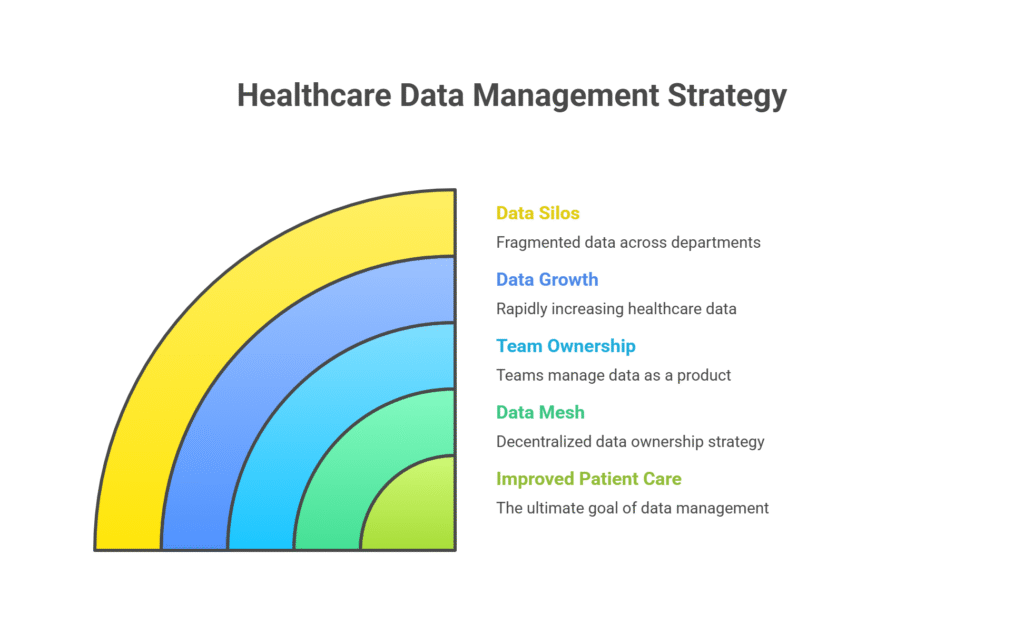
Healthcare data is growing fast, and managing it well is key to better patient care. But with data scattered across departments, it’s tough to keep up. Data mesh offers a fresh approach by letting teams own their data like a product. In 2025, with 70% of healthcare leaders looking at decentralized data strategies, this method is picking up steam.
The Goal: Let Teams Own Their Data
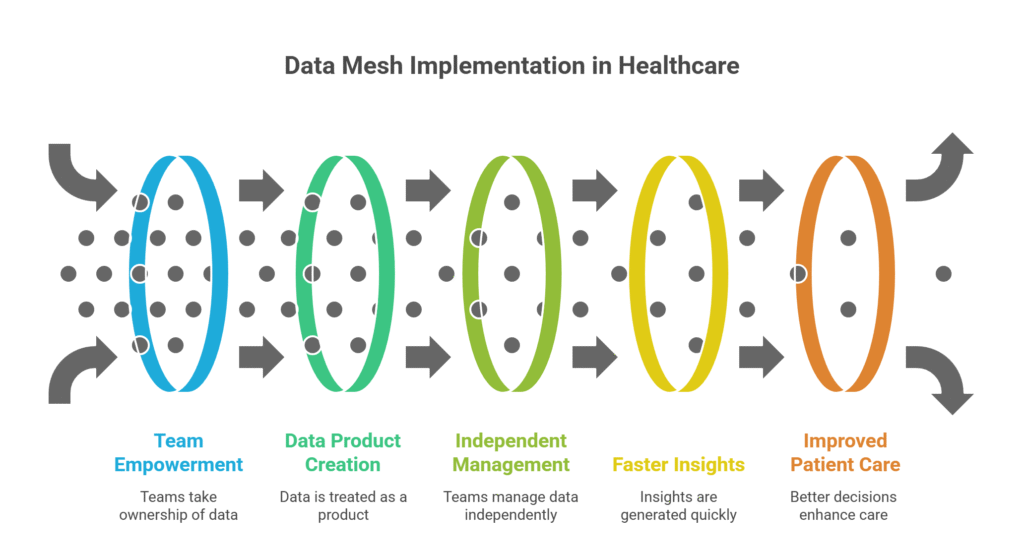
The idea behind data mesh is simple: let healthcare teams like those in patient care, labs, billing, or research take charge of their own data. Instead of one central team controlling everything, each group manages its own data, treating it like a product they build and maintain.
For example, the imaging team handles scan data, ensuring it’s accurate and accessible, while billing manages payment records. This setup empowers experts who know the data best to make it useful, helping insights flow faster and improving patient care.
This approach creates a system where teams collaborate but stay independent. A hospital’s oncology department, for instance, can focus on cancer patient data without waiting for a central IT team to process it. This cuts delays and makes data more relevant to specific needs, like tailoring treatment plans or tracking outcomes. By giving teams ownership, data mesh fosters a responsive healthcare environment where insights drive better decisions.
The Problem: Data Is a Mess
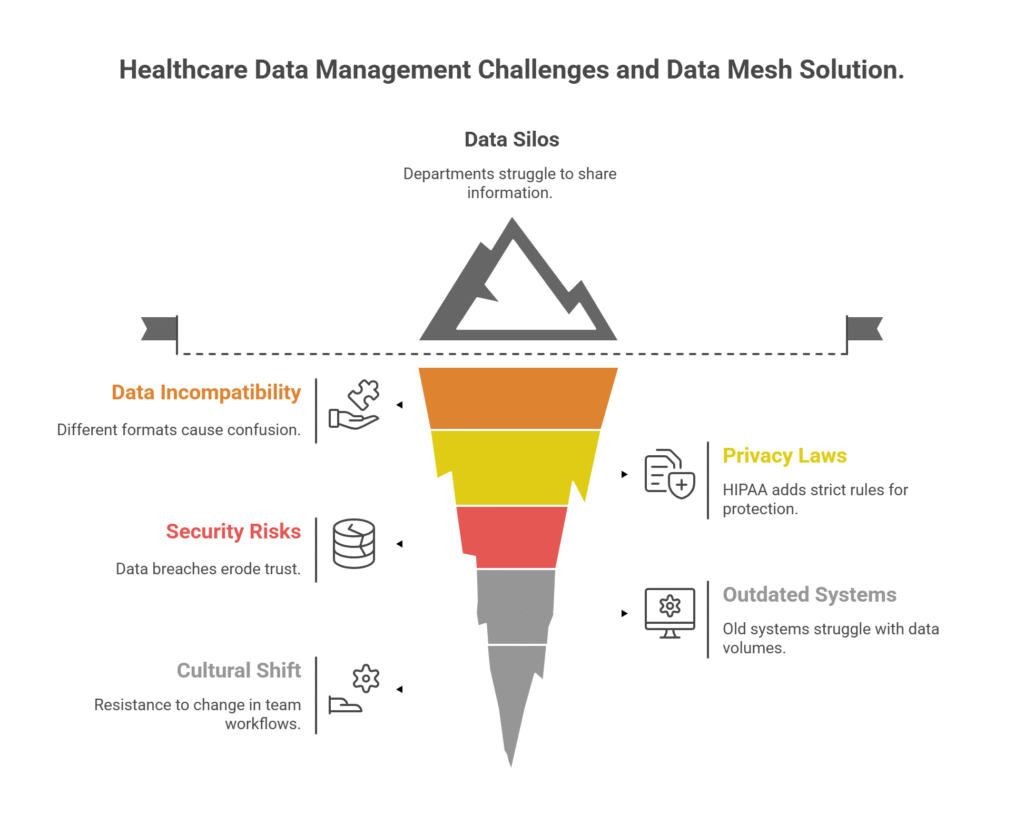
Healthcare data is a challenge to manage. Departments like labs, pharmacies, and radiology often work in silos, making it hard to share information. A lab might store test results in one format, while imaging uses another, causing confusion when teams try to combine data. Privacy laws, like HIPAA in the U.S., add strict rules to protect patient information, and security risks like data breaches make trust a big issue. Many hospitals still rely on outdated systems that struggle to handle modern data volumes, slowing everything down.
On top of that, changing how teams work is tough. Most healthcare staff are used to centralized systems where IT handles everything. Asking them to take ownership of data requires a cultural shift, and without clear rewards like faster access to insights or easier workflows people resist change. In 2025, these hurdles slow down data use, making it harder to coordinate care or spot trends, like rising cases of a disease.
For example, a hospital might struggle to combine patient records from different departments to create a full picture of a patient’s health. This leads to delays in treatment or missed opportunities for research. The complexity of healthcare data, combined with old habits and systems, creates a bottleneck that data mesh aims to fix.
How Data Mesh Helps
Data mesh tackles these problems with a team-focused approach. It’s built on four key ideas:
-
Data as a product. Each team treats its data like a product they’re responsible for. For example, the research team ensures its clinical trial data is accurate and easy to use, just like a company ensures a product meets customer needs.
-
Self-service tools. Teams use platforms to access and manage data without relying on IT. A doctor could pull patient records in seconds, or a researcher could analyze trends without waiting for approval.
-
Shared rules (federated governance). Common standards are set across teams to keep data secure, consistent, and compliant with laws. This ensures everyone plays by the same rules while working independently.
-
Flexibility. Teams can adapt quickly to new needs, like integrating data from wearable devices or responding to new health regulations.
This approach fits hospitals with many specialties, like cardiology, oncology, or pediatrics, because each team can focus on its own data while staying connected. For instance, a hospital using data mesh could let its cardiology team manage heart monitor data while sharing key insights with the emergency department. Self-service platforms make data accessible, and shared rules ensure it’s safe and reliable.
Data mesh also works with modern tech, like cloud-based platforms, to handle large datasets. It doesn’t require scrapping old systems but builds bridges between them, making it practical for hospitals with legacy infrastructure. By empowering teams with expertise, data mesh reduces bottlenecks and makes data a tool for better care.
The Benefits
Data mesh can bring real wins for healthcare. Here are some key advantages:
-
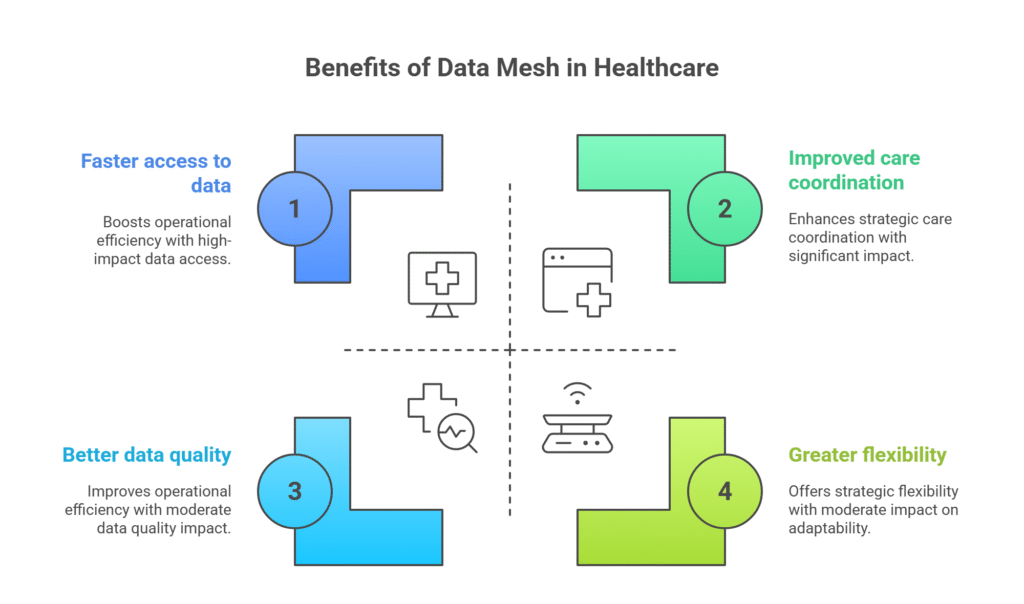
Faster access. Self-service tools let teams get data quickly. A doctor could check a patient’s history in moments, speeding up diagnosis or treatment plans.
-
Better quality. Treating data as a product encourages teams to keep it accurate and clear, reducing errors like duplicate records or missing test results.
-
More trust. Shared rules ensure data meets privacy and security standards, building confidence across teams. For example, a hospital could share anonymized data for research without risking patient privacy.
-
Greater flexibility. Teams can adapt to new demands, like adding data from fitness trackers or responding to a public health crisis.
-
Improved care. With 70% of healthcare leaders exploring decentralized data in 2025, data mesh could help coordinate care across departments, giving a clearer view of patient health.
For example, a hospital using data mesh might spot patterns in patient data faster, like noticing a rise in flu cases across departments. This could lead to quicker responses, like ordering more vaccines.
Research teams could also analyze data more efficiently, speeding up studies on new treatments. These benefits add up to better outcomes for patients and staff.
Projected to climb from $1.2 billion in 2023 to $2.5 billion by 2028, data mesh is emerging as the architecture that could empower healthcare domains to own, govern, and scale their data products securely and independently.
By GlobeNewswire
What’s Next
Looking ahead, data mesh could expand to cover more areas of healthcare. Wearable devices, like smartwatches tracking heart rates, are producing huge amounts of data. Data mesh could help hospitals integrate this information, giving doctors real-time insights into patient health.
New tools, like AI-powered analytics or stronger security platforms, could make data mesh even more effective by automating tasks and protecting sensitive information.
Final Thoughts
Data mesh offers a practical way to tame healthcare’s data chaos by letting teams own their data. It’s not a quick fix silos, old systems, and resistance to change are real hurdles.
But the benefits, like faster access, better quality, and more flexibility, make it worth exploring. In 2025, with 70% of healthcare leaders testing decentralized data strategies, data mesh is a trend to watch.