It usually begins with a well-intended decision.Move everything to the cloud. Faster insights. Better scale. Simpler analytics.On paper, it feels like progress. A step toward modern systems and better decision-making.But a few months in, the experience starts to feel different. Dashboards still reflect a version of reality that has already passed. Teams pause in meetings to double-check numbers. Engineers spend time tracing issues that were never part of the original plan.The data has moved, but the clarity has not followed. And that is when a quieter realization begins to take shape.Perhaps the challenge was never about where the data lived, but how it stayed connected.
The Gap No One Talks About
Systems like Microsoft SQL Server continue to do exactly what they were designed for. They handle transactions, support critical applications, and keep operations running smoothly and reliably.
At the same time, analytics has naturally shifted toward the cloud to take advantage of flexibility and scale.
Individually, both sides work well. The challenge lies in the space between them.
To bridge this gap, organizations rely on ETL pipelines. Data is extracted, transformed, and loaded at fixed intervals. It works, but it introduces something unavoidable: delay.
At first, that delay feels manageable. Over time, it becomes visible.
Finance teams see yesterday’s numbers. Marketing reacts to behavior that has already changed. Decisions are made with a slight but meaningful lag.
When Effort Increases but Clarity Does Not
As data environments grow, so does the complexity behind them. Pipelines expand. Dependencies stack up. Maintenance becomes continuous.
A minor schema change can disrupt workflows. A delayed job can ripple through reports. What once felt structured begins to feel fragile.
Engineering teams spend more time maintaining movement than enabling insight. Analysts work with data that may already be outdated. Business teams move forward cautiously, aware that the numbers in front of them might shift.
The real impact is not just operational. It is the hesitation that slows decisions.
What If Data Didn’t Need to Move to Be Useful
A different approach begins by questioning a long-held assumption.
What if data did not need to be constantly moved to create value?
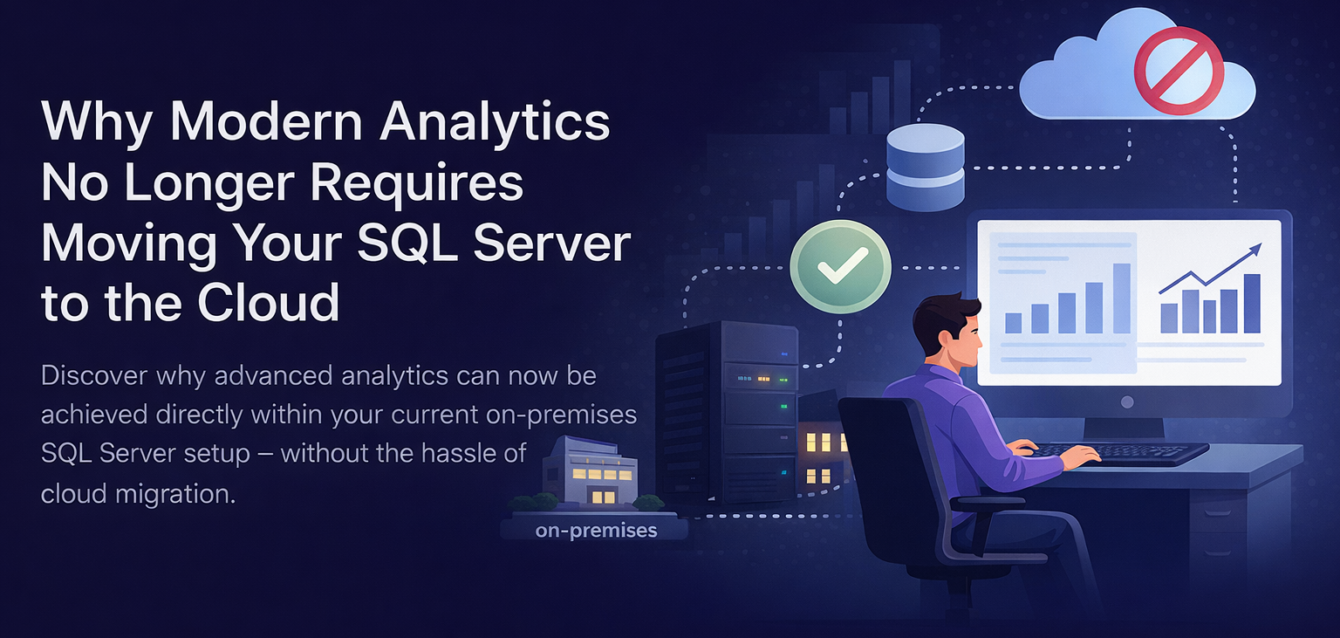
With Microsoft Fabric Mirroring, the focus shifts from movement to alignment. Instead of repeatedly copying datasets, only changes are captured as they occur and reflected into a unified environment like OneLake.
The operational system continues running exactly as it always has. No disruption. No added load.
Behind the scenes, every insert, update, and delete is recorded and mirrored securely. Data becomes available for analytics almost as soon as it changes, without the need for scheduled pipelines or manual intervention.
It is not about moving data faster.
It is about removing the need to move it at all.
What This Looks Like in Reality
The impact is not loud, but it is deeply noticeable. There are no pipeline failures to chase. No refresh cycles to wait for. No constant troubleshooting behind the scenes. Data begins to feel available, reliable, and current. Teams stop working around delays and start working with clarity. The system becomes simpler, not because it does less, but because it removes what is no longer necessary
Building Insights That Stay Current
Bronze Layer: Raw operational data flows in exactly as it exists from the source system, creating a reliable and continuously updated foundation
Silver Layer: Data is cleaned, standardized, and enriched to improve quality, consistency, and usability for analytical use cases
Gold Layer: Data is transformed into business-ready models, aligned with key metrics and optimized for reporting and decision-making
Seamless Reporting with Microsoft Power BI:
- Reports connect directly to live, continuously updated data
- No dependency on scheduled refresh cycles or duplicated datasets
- Dashboards reflect near real-time business performance
- Historical trends and current insights are available in one unified view
- Users can explore and drill into data instantly without waiting.
What Changes Across the Organization
The benefits extend beyond systems into everyday work.
Engineering teams focus less on maintaining pipelines and more on building value. Analysts spend less time validating data and more time understanding it. Leaders gain confidence in decisions because the data reflects what is happening now.
Even conversations begin to change.
From “Is this data correct?”
To “What should we do next?”
And that shift creates momentum across the organization.
When Alignment Becomes the Advantage
Modern analytics is no longer defined by how much data can be moved, but by how seamlessly it stays connected. When systems remain continuously aligned, complexity fades. Confidence grows. Decisions happen faster and with greater clarity. Organizations no longer have to choose between stability and scalability. They begin to experience both, without friction.
Where Clarity Finally Catches Up With Data
Over time, the entire approach to data begins to feel different.
Data is no longer something that needs to be chased, transferred, or rebuilt to be useful. It becomes consistently available, quietly aligned, and ready when needed. The effort behind the scenes reduces, and the noise around validation begins to disappear.
What remains is a clearer, more dependable view of the business.
And in that clarity, decisions no longer feel delayed or uncertain.
They move forward with confidence, supported by data that finally reflects the present as it truly is.