Imagine a world where a doctor can see a patient’s full story medication history, insurance claims, and MRI scans all in one place. Combining these different types of data could make healthcare smarter, faster, and more personal.
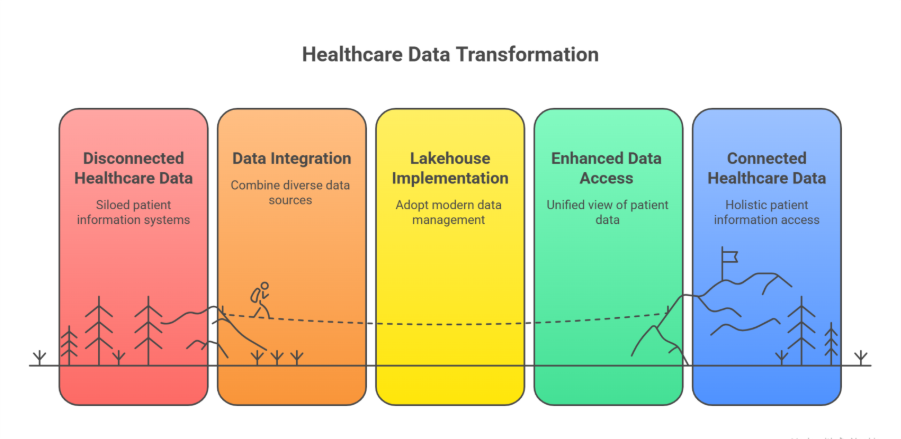
Lakehouse methods, a fresh way to handle data, might make this possible. In 2025, with 60% of healthcare groups looking to better connect their data, lake houses are getting attention.
Why Blending Data Matters
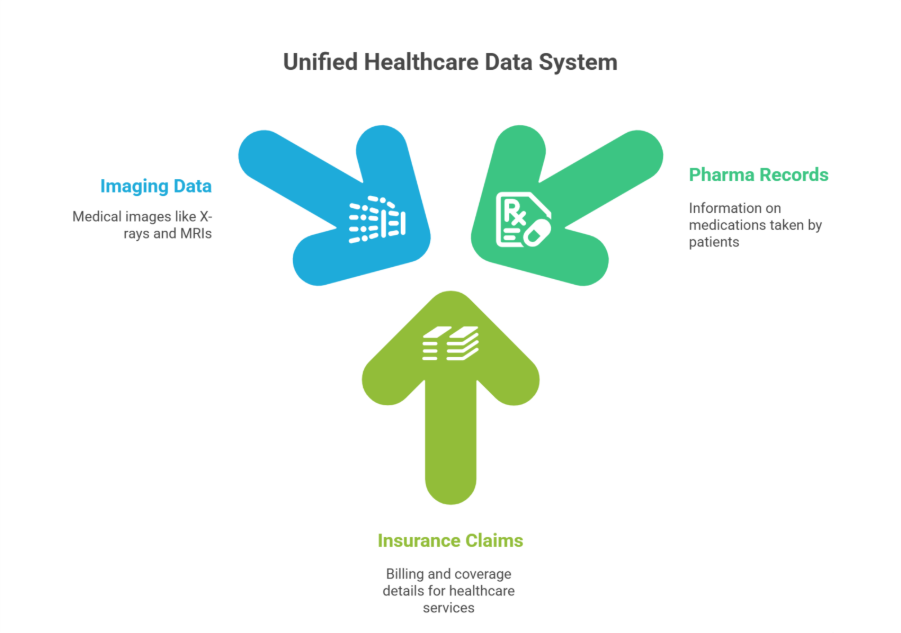
The goal is to bring together three kinds of data: drug records (what medicines a patient takes), insurance claims (billing and coverage details), and imaging data (like X-rays or MRIs). When these are linked, it helps in several ways:
-
Better Treatment Tracking: Doctors can see if a patient’s medicine is working by comparing it with their scans and insurance records.
-
Smarter Research: Researchers can study how drugs affect people by looking at all the data together, spotting patterns that were hidden before.
-
Personalized Care: Patients get treatments tailored to their unique needs, based on a full picture of their health.
-
Faster Progress: Without blending, data stays scattered, slowing down decisions and discoveries. A single system keeps things moving.
A single system that ties it all together could push healthcare forward.
What’s Standing in the Way
Mixing these data types isn’t easy. Drug records might use different names or formats than insurance systems, and imaging files are often huge and tough to match up. Keeping data safe is a big worry leaks could expose private patient info.
Older tech systems also struggle to keep up with today’s needs. In 2025, these problems keep data apart, making it hard for healthcare to work smoothly or uncover deeper insights.
How Lakehouse Can Help
Lakehouse might be the answer. They’re like a mix of two ideas: data lakes, which hold all kinds of raw information, and data warehouses, which organize it neatly. A lakehouse can store giant imaging files alongside tidy insurance records in one place. Imagine a system that links a patient’s medication history to their latest scan in seconds.
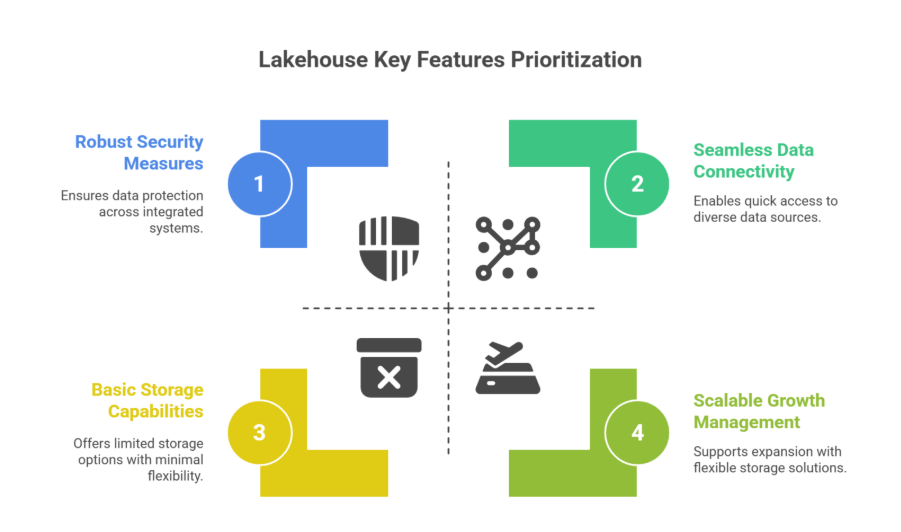
It works by pulling in all sorts of data, sorting it with clever tools, and making it ready to use. Lakehouses focus on seven key things: flexible storage, connecting data, keeping it safe, handling big growth, quick access, smart analysis, and working with other systems. This could change how healthcare manages information.
The Benefits
Lakehouses open up some exciting possibilities for healthcare:
-
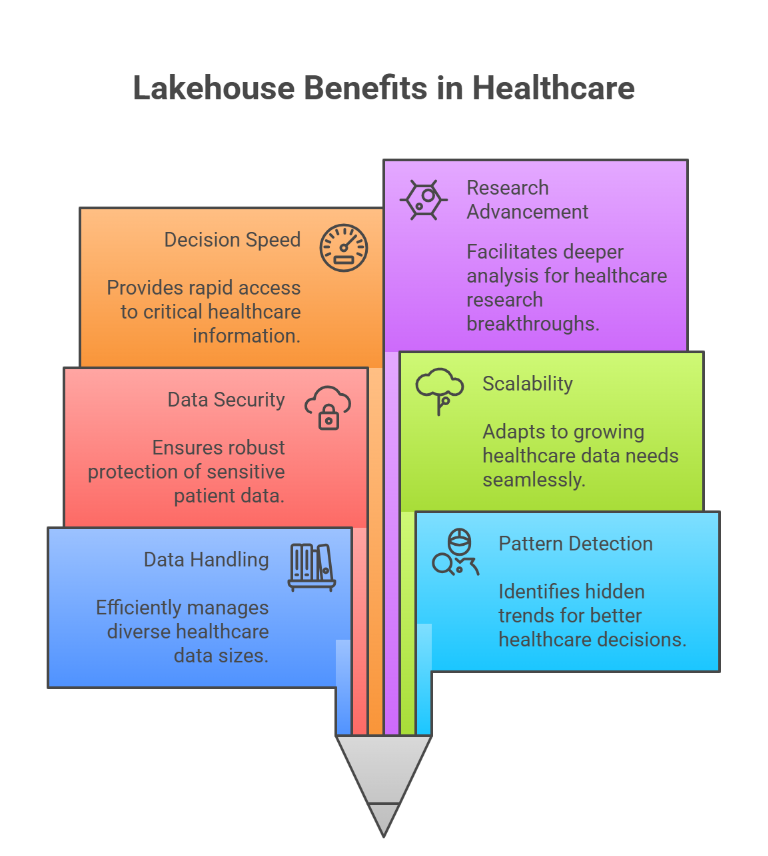
Handles All Data Sizes: They can store huge imaging files like MRIs and smaller records like claims without a hitch.
-
Spots Hidden Patterns: By linking data, they can find trends, like if a drug causes unexpected side effects.
-
Keeps Data Safe: Strong security protects patient information from hackers or leaks.
-
Grows with Needs: They can handle more data as healthcare systems expand.
-
Speeds Up Decisions: Doctors and researchers get information fast, so they can act quickly.
-
Boosts Research: Better analysis means researchers can dig deeper into health trends and solutions.
-
Improves Care: A 2025 report says 60% of healthcare organizations want better data connections, and lake houses could lead to clearer insights and better care plans.
What’s Next
Looking ahead to 2025 and beyond, lake houses might pull in even more data, like info from fitness trackers or health apps. New tools could make security stronger against cyber threats, and smarter systems might predict what patients need before problems start.
But there are still hurdles old systems need updates, and privacy rules, like HIPAA, must be followed carefully. The future could bring a healthcare system where data flows easily, leading to care that’s smarter and more connected.
Final Thoughts
Lakehouse methods offer a way to bring together drug records, insurance claims, and imaging data, aiming to make healthcare better despite challenges like mismatched formats and security risks. They could help spot trends, handle growing data, and speed up decisions, though fitting them into existing systems takes work.

Lorem ipsum dolor sit amet, consectetur adipiscing elit. Ut elit tellus, luctus nec ullamcorper mattis, pulvinar dapibus leo.