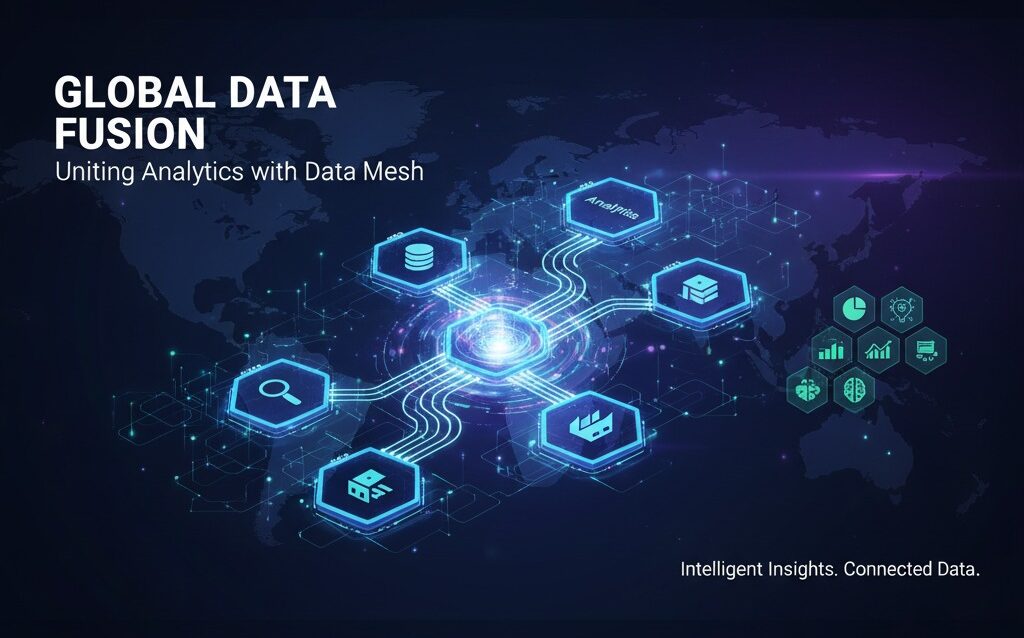
What if your global distribution hubs shared insights like one sharp mind? Data Mesh makes this real, connecting analytics across regions for manufacturers and distributors. In 2025, 71% of supply chain teams use decentralized data strategies. This approach is growing fast.
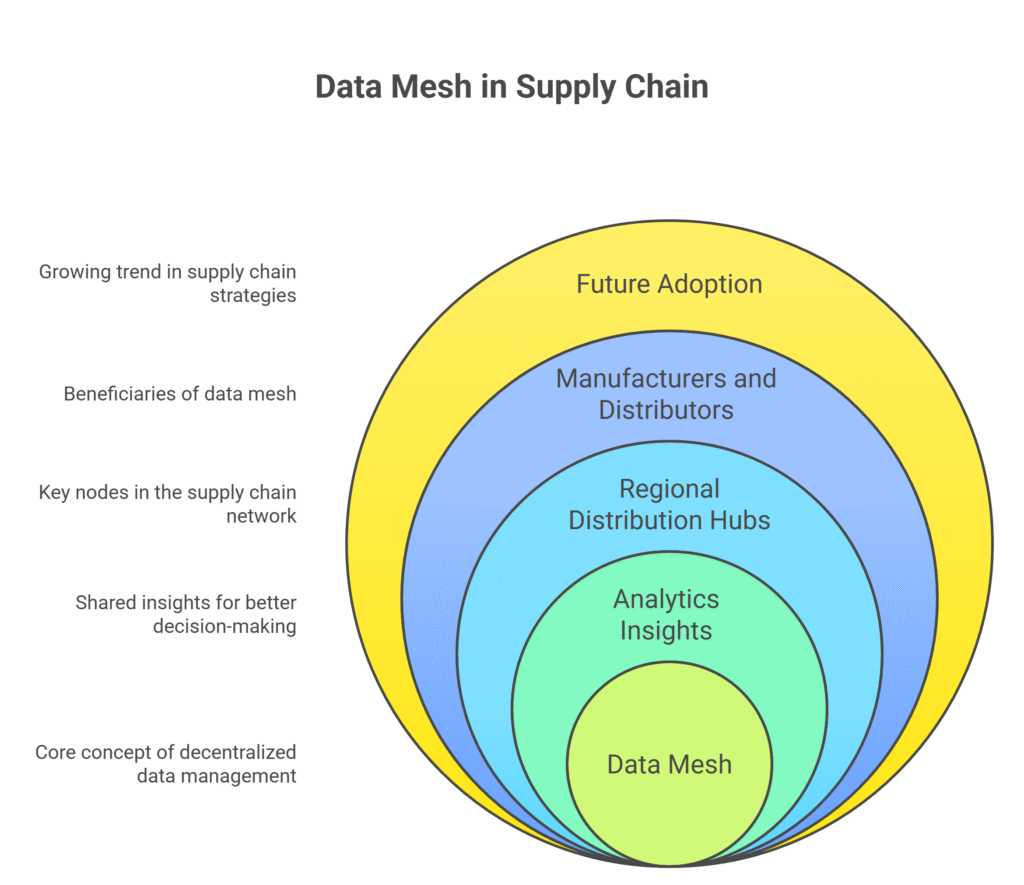
The Big Dream: Unified Analytics
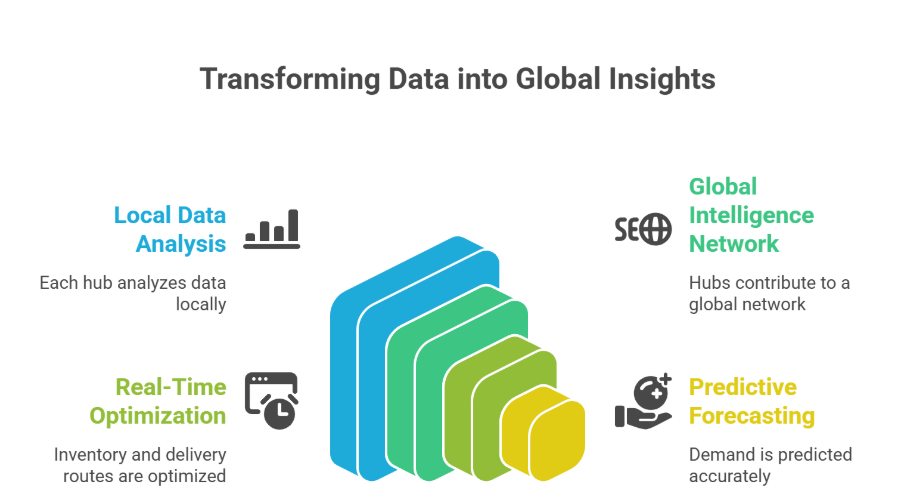
Picture warehouses in Asia, Europe, and North America collaborating seamlessly. Each hub analyzes its data locally but contributes to a global intelligence network. Data Mesh makes this possible by decentralizing data ownership while connecting hubs into a cohesive system.
This approach empowers real-time inventory optimization, streamlined delivery routes, and predictive demand forecasting. By breaking down barriers, Data Mesh enables insights to flow freely, transforming fragmented operations into a synchronized, data-driven powerhouse.
The Challenges: Barriers to Unity
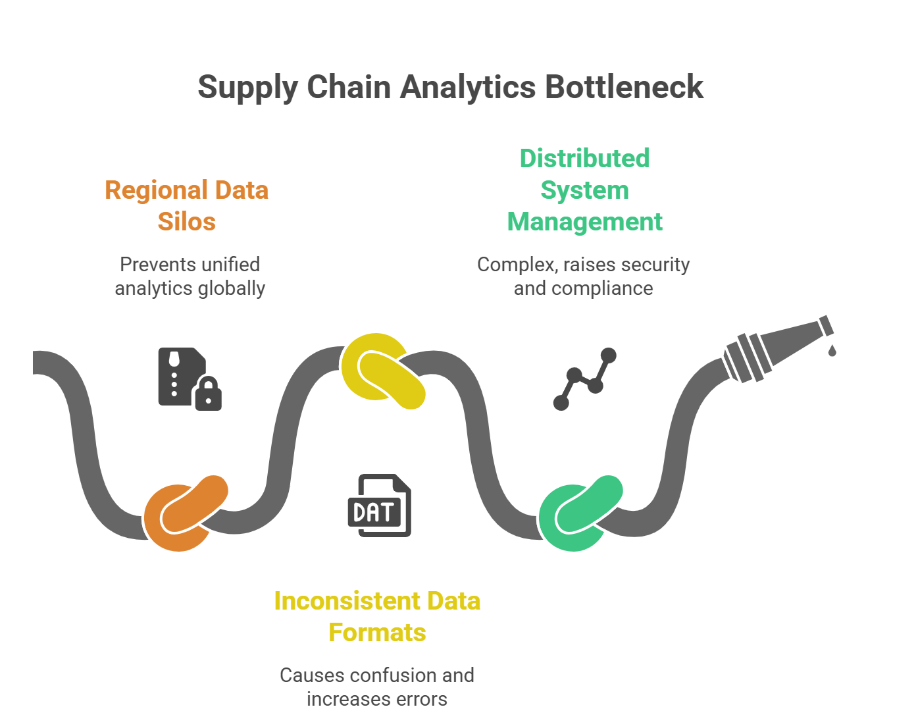
Global supply chains face significant hurdles in achieving unified analytics. Data trapped in regional silos creates blind spots, hiding critical trends. Inconsistent data formats across hubs lead to confusion and errors.
Managing distributed systems is complex, and sharing data globally raises security and compliance concerns. In 2025, these challenges can delay decision-making, increase costs, and frustrate teams. Without a solution, supply chains risk falling behind in a hyper-competitive market.
With a forecasted $ 5.1 billion market by 2032, Data Mesh will redefine global data fusion, empowering supply chain networks to break silos and deliver unified analytics with unprecedented speed and security.
– Attributed to IDC
Data Mesh in Action: Connecting the Dots
Data Mesh transforms global analytics by creating a decentralized yet interconnected data architecture. Here’s how it operates:
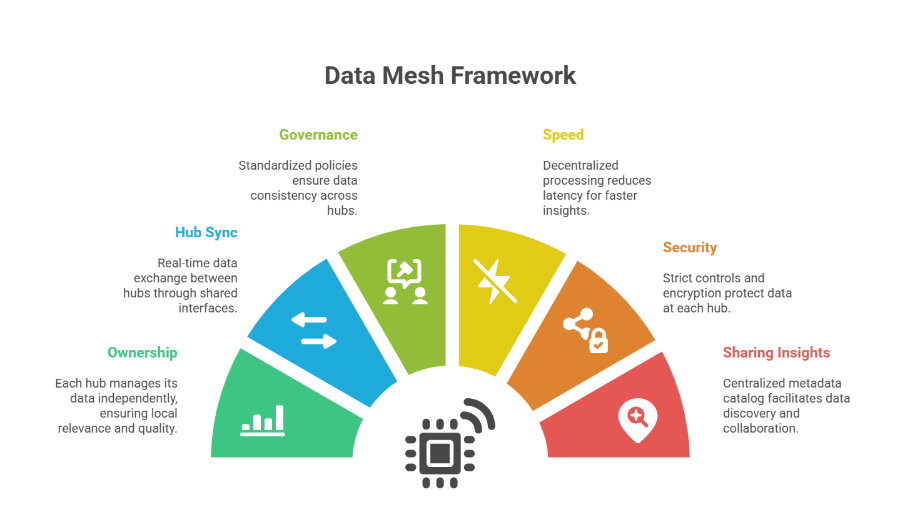
- Ownership: Each hub manages its data as an independent product, with dedicated teams responsible for its quality and structure. This ensures data is curated locally, aligning with specific operational needs, like regional inventory patterns.
- Hub Sync: A federated system connects hubs through shared interfaces, enabling real-time data exchange. For example, APIs allow a European hub to access Asia’s shipment data, creating a unified data flow without centralizing control.
- Governance: A universal governance layer enforces standardized schemas and policies across hubs. This ensures data from different regions aligns in format and quality, making cross-hub analytics seamless.
- Speed: Decentralized processing empowers hubs to run analytics locally using tools like edge computing. This reduces latency, allowing teams to generate insights without waiting for centralized data pipelines.
- Security: Data Mesh implements strict access controls, encryption, and audit trails. Each hub’s data is secured locally, with only necessary insights shared via secure protocols, minimizing exposure.
- Sharing Insights: A centralized metadata catalog tracks available datasets, enabling hubs to discover and query each other’s insights. This fosters collaboration, like sharing predictive models for demand forecasting.
This framework turns fragmented data systems into a cohesive, efficient network, enabling agile analytics across global operations.
The Benefits: Results That Count
Adopting Data Mesh delivers transformative results for global supply chains:
-
Accountability: Localized data ownership empowers hubs to maintain high-quality, relevant data.
-
Global Insights: Connecting hubs reveals patterns, such as demand surges or supply bottlenecks, driving smarter strategies.
-
Trustworthy Governance: Standardized policies build confidence in data accuracy and compliance.
-
Faster Decisions: Decentralized analytics reduce delays, enabling rapid responses to market changes.
-
Enhanced Security: Robust protocols protect sensitive data while enabling secure sharing.
-
Innovation: Collaborative insights unlock new opportunities, like predictive analytics for inventory optimization.
With 71% of supply chain teams embracing Data Mesh, it’s proven to cut costs, boost efficiency, and sharpen competitive edges, as seen in implementations by companies like JPMorgan Chase and Spotify.
The Future: What’s Next
Looking ahead, Data Mesh is poised to evolve further in 2025. Integration with AI could enhance predictive capabilities, forecasting demand with unprecedented accuracy. Real-time analytics could become standard, driven by advances in edge computing and Lakehouse architectures.
However, challenges remain—building data literacy, aligning systems, and navigating privacy regulations like GDPR and CCPA will be critical. Industry pioneers like Thought Works suggest that investing in data skills and flexible tech stacks will shape Data Mesh’s future, ensuring hubs thrive in a data-driven world.
Final Thought: A Step Toward Greatness
Data Mesh offers a bold vision for united analytics across global hubs. It overcomes silos, delivering accountability and efficiency. As 2025 approaches, it points to a future of brilliance. Consider its potential for your operations.