Imagine a factory where machines rarely break down, production hums along without hiccups, and every part of the process works like a well-oiled machine. That’s the promise of predictive AI in manufacturing. It’s not just about fixing things when they break; it’s about knowing what’s going to happen before it does and making sure everything runs at its best.
The Dream: Factories That Run Like Clockwork
In manufacturing, time is money. Every minute a machine is down or a production line stall, it costs big, missed deadlines, lost sales, frustrated customers. In the past, factories relied on fixed schedules for maintenance, like changing your car’s oil every few months whether it needed it or not. Or worse, they’d wait for something to break, then scramble to fix it. Both ways waste time, parts, and cash.
Predictive AI flips this upside down. It’s like having a super-smart assistant who watches every machine, spots trouble before it happens, and tweaks things to keep production flowing. By looking at data think machine performance, past breakdowns, or even how much product is moving it predicts when something might go wrong and helps keep everything running smoothly. This isn’t just about avoiding breakdowns; it’s about making more, wasting less, and staying ahead of the competition.
The Problems Manufacturers Face
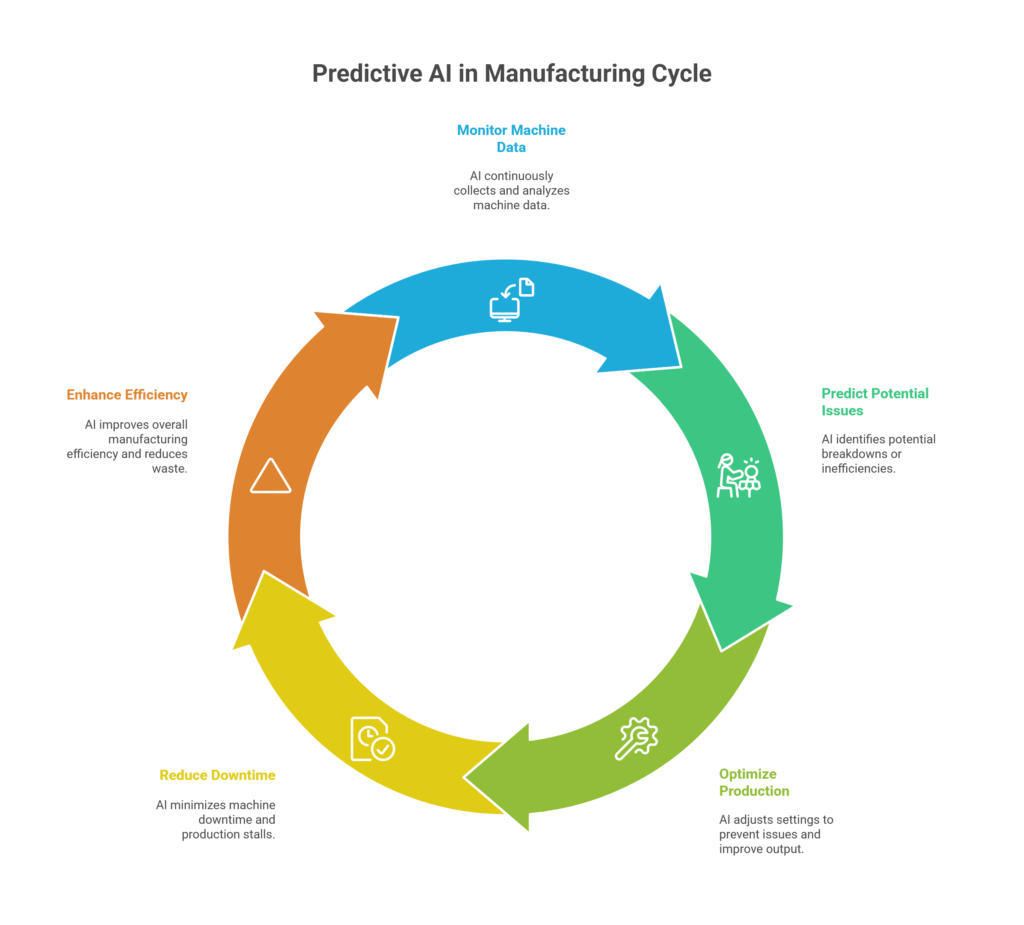
Running a factory isn’t easy. Machines break down out of nowhere, stopping production and causing chaos. Sometimes output isn’t steady—one day you’re churning out perfect parts, the next you’re dealing with defects that hurt quality and profits.
Older machines don’t always play nice with modern tech, making it hard to collect the data needed to spot problems. And tying all that data together across different systems? That’s a headache. In 2025, these issues can drag down a factory’s efficiency, raise costs, and make it tough to keep customers happy.
For example, a sudden machine failure might halt an entire assembly line, delaying orders and costing thousands. Inconsistent output means you might overproduce one day and underdeliver the next, messing up your supply chain.
Older equipment often lacks the sensors needed to track performance, and even when you have the data, getting it to work with new software can feel like fitting a square peg in a round hole. These are real, everyday challenges that manufacturers wrestle with.
How Predictive AI Saves the Day
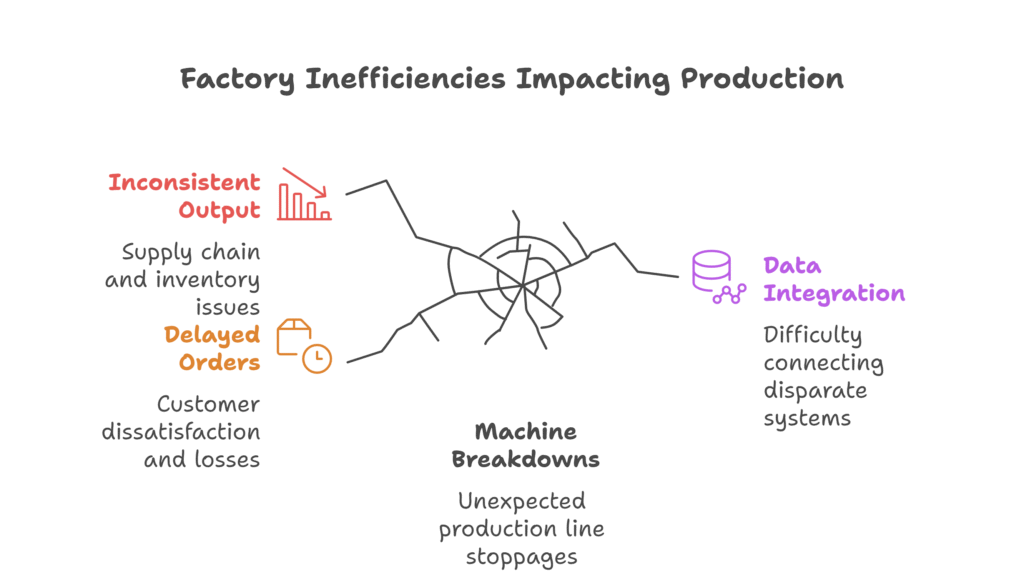
Predictive AI is like a guardian angel for factories. It uses data—both from the past and in real time—to keep things on track. Here’s how it works:
-
Spotting Trouble Early: By looking at things like vibrations, temperature, or pressure from sensors on machines, AI can predict when something’s about to break. For instance, if a motor’s running hotter than usual, it might send an alert to fix it before it fails.
-
Tracking Performance: It keeps an eye on how machines are doing, catching small issues that could slow things down. Think of it like checking your car’s dashboard for warning lights.
-
Tweaking Processes: AI doesn’t just warn about problems; it suggests changes to make production better. Maybe it notices a machine is working too hard and adjusts its speed to improve output.
-
Connecting Data: It pulls together information from different systems—old machines, new sensors, even sales data—so you get a clear picture of what’s happening.
-
Saving Money: By catching issues early, AI cuts down on expensive repairs and keeps production steady, boosting profits.
-
Boosting Output: With everything running smoothly, factories can make more products with fewer hiccups, keeping customers happy.
For e.g. a car parts factory might use predictive AI to monitor its assembly line. If sensors pick up weird vibrations in a robotic arm, the AI alerts the team to check it out, preventing a breakdown that could stop production for hours. Or it might notice a pattern of defects and adjust the machine settings to improve quality, all without slowing down the line.

Why It’s a Big Deal
The numbers tell the story. With 69% of manufacturers using predictive AI in 2025, it’s clear this tech is catching on. Why? Because it delivers. It cuts downtime by catching problems early some studies say by up to 50%. It keeps machines running at their best, which means better-quality products.
By connecting data across systems, it gives factory managers a clear view of what’s going on, so they can make smart decisions. Early warnings save on repair costs, and smoother production means more output and bigger profits.
Take a real-world example: a major car manufacturer used predictive AI to monitor its production line. Sensors tracked things like temperature and pressure, and the AI predicted when machines were likely to fail.
This cut unexpected downtime by 30% and saved 20% on maintenance costs. That’s real money and real results, keeping the factory competitive and customers satisfied.
What’s Next for Predictive AI
In 2025, predictive AI is already doing a lot, but there’s more to come. Soon, it could predict supply chain problems like a delayed shipment of raw materials and suggest ways to work around it, like finding a new supplier.
It might also help factories use less energy by figuring out the most efficient way to run machines, saving money and helping the environment. Imagine a factory that not only avoids breakdowns but also cuts its electric bill and keeps deliveries on track, no matter what.
AI-driven predictive maintenance cut our automotive assembly line downtime by 35% and maintenance costs by 20% using real-time IoT sensor data
Get Started
Predictive AI is changing manufacturing for the better. It tackles the biggest headaches breakdowns, inconsistent output, and disconnected data making factories more efficient and profitable. With 69% of manufacturers already on board in 2025, it’s clear this isn’t just a trend; it’s the future.