Healthcare has a big problem: patient information doesn’t always move easily between doctors, hospitals, and pharmacies. This can mess up care. Real-time data fabric is a smart tool that could fix this by connecting data instantly. In 2025, with 65% of healthcare groups focusing on better data sharing, this tech is getting a lot of attention.
Why We Need Better Data Sharing
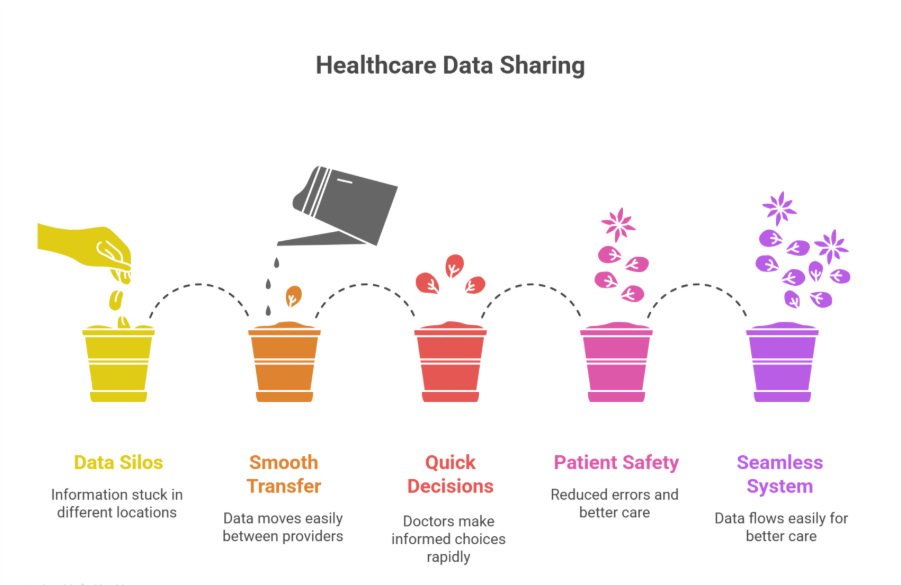
When your test results, prescriptions, or doctor’s notes can move smoothly from one place to another like from your local clinic to a big hospital it makes a huge difference. Doctors can make quick, smart choices about your care, especially if you switch providers.
If your information gets stuck, it can slow things down or lead to mistakes, like getting the wrong medicine. Right now, healthcare needs a system where all this data flows easily to keep patients safe and build trust. Good data sharing means better care, plain and simple.
What’s Blocking the Way
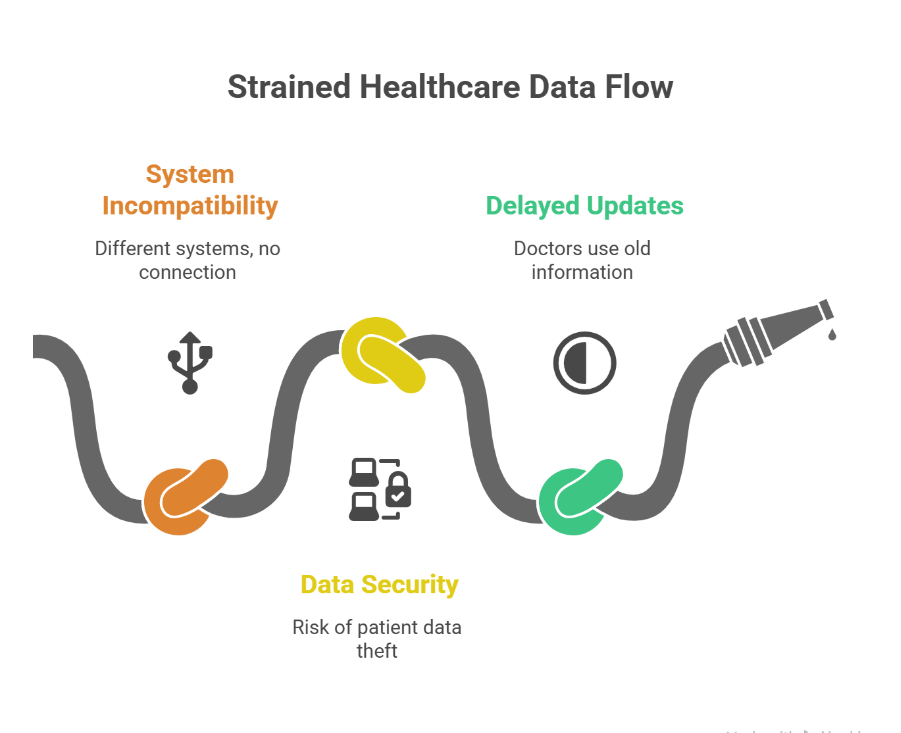
Getting data to move freely in healthcare is tough. Different systems use different setups, so an old hospital computer might not talk to a new app. Keeping patient info safe is a big worry nobody wants hackers stealing it.
Plus, if data updates take too long, doctors might be working with old information, which can cause problems. In 2025, these issues are still a headache, making it hard to create a connected healthcare system and putting patients at risk.
How Real-Time Data Fabric Can Help
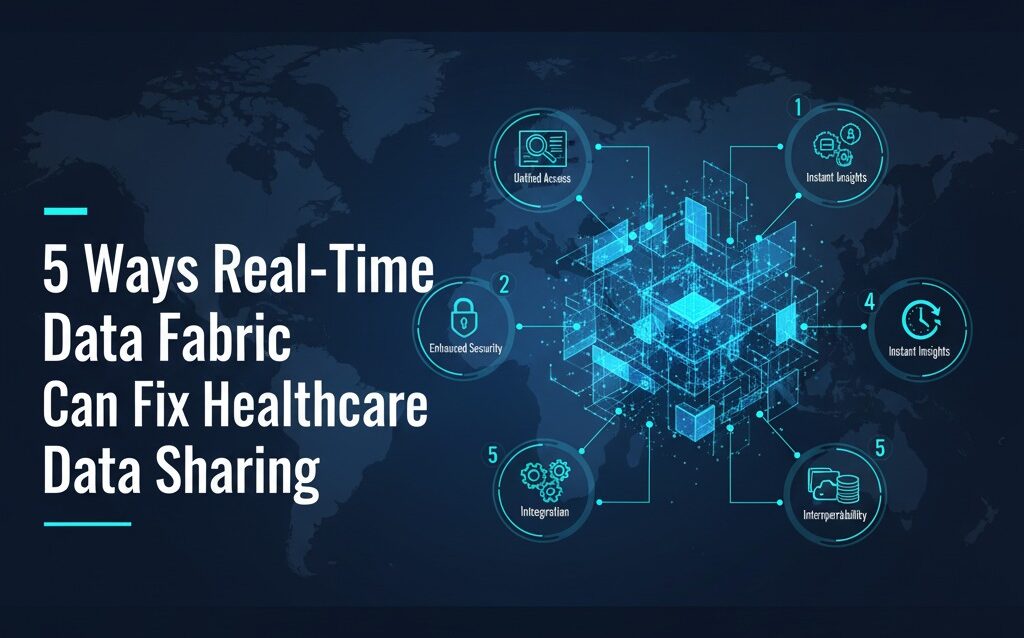
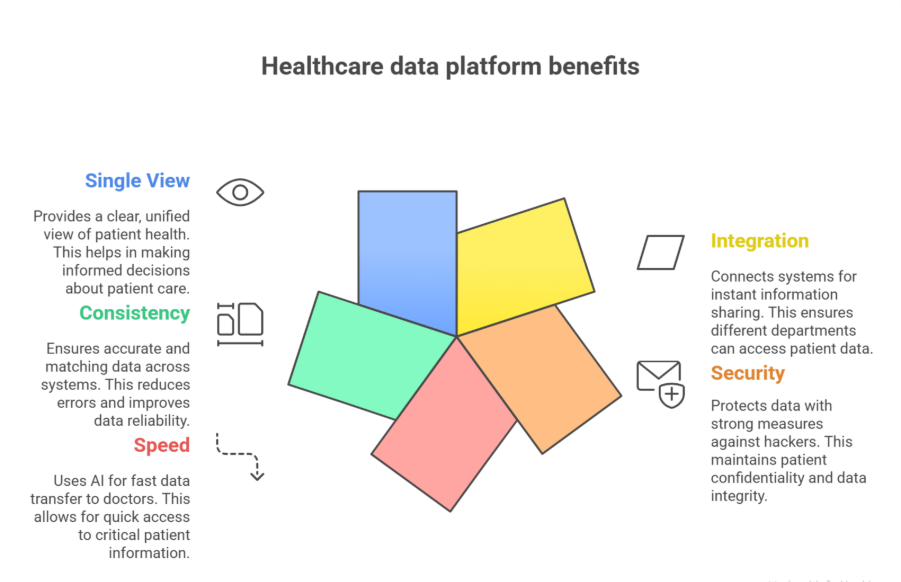
Real-time data fabric is like a super-smart bridge that links all healthcare data together. It uses five key ideas to make things work better:
-
Integration: It ties together different systems like hospital records and pharmacy apps so they can share info instantly.
-
Security: It keeps data safe with strong protections to stop hackers.
-
Speed: It uses AI to move data fast, so doctors get what they need right away.
-
Consistency: It makes sure data is accurate and matches up across systems, cutting down on errors.
-
Single View: It gives everyone one clear picture of a patient’s health, no matter where the info comes from.
This tech uses things like AI to automate tasks, metadata catalogs to keep track of data details, knowledge graphs to show how data connects, and virtual access so you don’t have to move data around.
It’s great for hospitals that need tight control and have to follow strict health laws, but it takes a lot of know-how and money to set up.
The Good Stuff It Brings
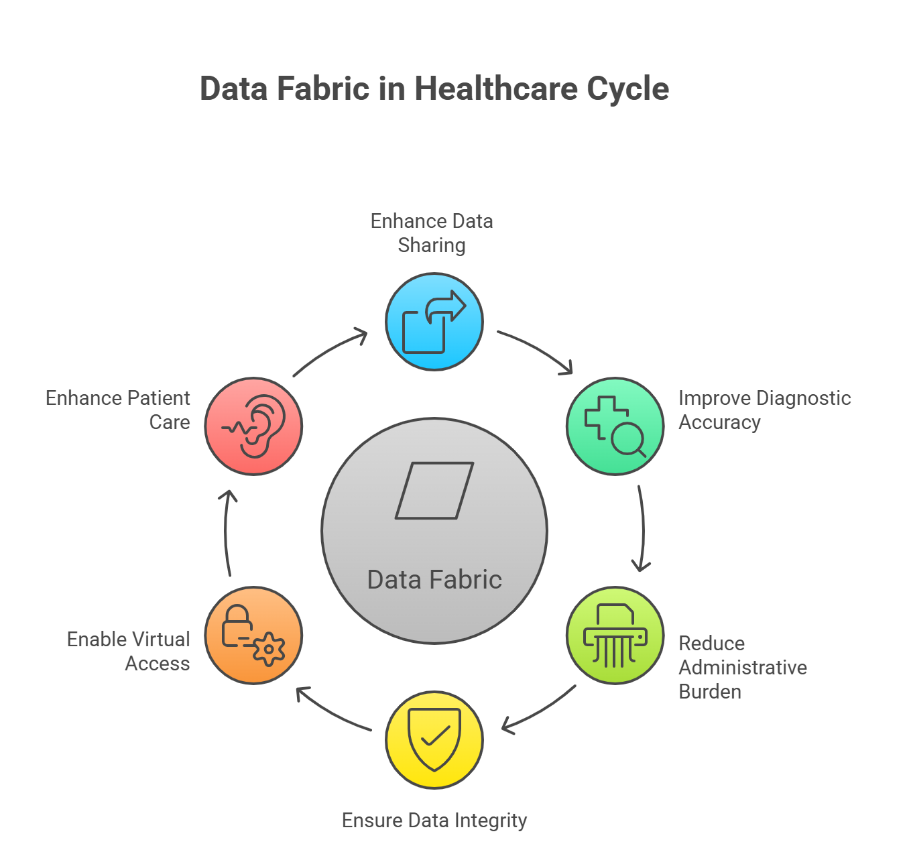
Data fabric can make healthcare better in some exciting ways. By linking everything together, it helps doctors figure out what’s wrong faster. AI can cut down on boring paperwork, letting staff focus on patients. Metadata catalogs and knowledge graphs make sure the data is correct, so there’s less chance of mistakes.
Virtual access lets different systems use the same info without copying it, which saves time. A single, clear view of a patient’s health means fewer mix-ups, like giving the wrong dose of medicine. With 65% of healthcare groups saying better data sharing is a top goal, this could lead to smoother care and happier patients.
What’s Next for Data Fabric
Looking ahead to 2025 and beyond, data fabric could connect more places, like small rural clinics to big city hospitals. Better AI tools and smarter data pipelines might make it even easier to share info. But there’s work to do setting this up takes serious tech skills and costs a lot.
Privacy rules, like laws protecting patient info, will need close attention. So will making sure different systems can work together. The dream is a healthcare system where data moves without a hitch, making care faster, safer, and easier to get, no matter where you are.
By 2028, the data fabric market could hit $2.5 billion, with the data lakehouse market reaching $66 billion by 2033, showing healthcare’s big push for connected data solutions.
By Fortune business Insights
Final Thoughts
Real-time data fabric isn’t just a tech trick it’s a way to make healthcare work better for everyone. By fixing the gaps in how data moves, it can help doctors make smarter calls, keep patients safer, and cut out waste.
The challenges, like old systems and security risks, are real, but data fabric offers a clear path forward. As healthcare pushes for better connections in 2025, this tech could be the key to a system where information flows smoothly, helping patients get the care they need when they need it.
It’s not perfect yet, and it’ll take effort, but the payoff could be a healthier, happier world.